With about 10,000 active satellites orbiting our beautiful planet and a projected increase of 50% by 2028, the satellite industry has never been this competitive. Space operations are more contested than almost any other industry. And while a healthy dose of competition can be great for a mission team's motivation, it also attracts malicious actors who'd benefit from your failure.
Is your mission team ready to identify the signature of a cyber anomaly? Do you know what steps to take to block an attack?
The impact of cyber interference for space ops
Cyber threats to space ops can take many forms like hacking, jamming, spoofing, and malicious software. A single cyberattack on a satellite can have significant and far-reaching consequences including disruption of communication and navigation services, loss of valuable data, and even physical damage to satellite equipment.
Protecting satellites from cyber intrusion requires a multi-layered approach that addresses various types of threats. Key protective measures include encryption, access control, system hardening, regular software updates, network segmentation, monitoring and logging, and incident response planning. By implementing these measures, engineers can reduce systems vulnerabilities and operators will be ready to defend their mission.
Is your mission hitting the mark? If the answer is no, you're not alone. Much of the industry is scrambling to catch up. But now is the time to look at how your team can lift its cyber standards.
The role of digital twins in satellite cybersecurity
Simulation software is a powerful tool for developing cyber-preparedness in satellite operations, allowing teams to test defense measures and build tactics to mitigate potential threats. One of the more effective cyber training formats enabled by a simulated environment is known as wargaming or red-teaming.
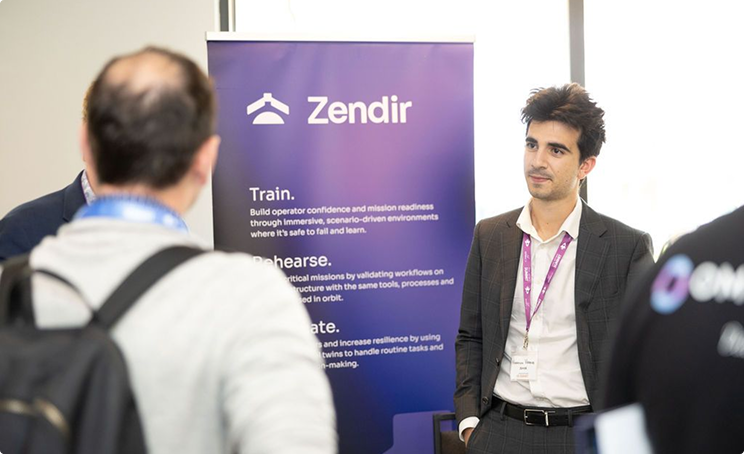
Zendir regularly hosts red-team challenges at global space conferences and specialist summits; we also facilitate training workshops for private operators and defence agencies. We divide participants into teams – some assigned to be bad-actor adversaries and the rest put on defense. Both roles are a powerful way to understand the real threats facing your mission and the infinite scenarios in which your satellite's systems are vulnerable to attack. When asked for feedback, the overwhelming majority of participants have been surprised at the limitations in their cyber awareness and feel more prepared to identify a cyber anomaly.
But to learn how they can protect and defend their mission from that anomaly... that requires more than just a one-day wargaming workshop. They need a repeatable, scalable, systems-specific environment to practice threat assessment and isolation.
Digital twins are the new standard for elite mission operations. With the right digital twin solution, your team can deepen their understanding of your mission's unique vulnerabilities, sharpen their identification of cyber-threats and reduce their isolation response times.
But not all digital twins are created equal, so how do you find the right solution for your mission?
The right environment for real training outcomes
There are plenty of satellite simulation tools on the market and even a few digital twins. Each offers their own unique benefits. To ensure successful technical integration, effective team onboarding and sustained engagement, there are a some key features you should prioritise in your procurement:
- Realistic simulations with multi-dimensional scenarios: To accurately test your organisation's defences, the software you choose should be able to simulate real-world scenarios and contemporary attack methods with the highest possible fidelity. Black hats (the bad kind of hackers) know they need to update their methods faster than the white hats (the good hackers) to be effective. Intermittent classroom based training is limited to high-level theory. "Static" simulations only provide generic scenarios that become outdated the day you buy the license (and often before that). Digital twin solutions like Zendir provide highly-detailed and dynamic scenarios for a training environment that's as current as your own mission systems and as variable as the contemporary space domain.
- Tried and tested by industry experts: the space industry is being flooded with new service providers and tech solutions promising to revolutionise your mission performance. Innovation is incredibly powerful for growth. But for cyber preparedness, elite space operators should prioritise assurance over aspiration. When seeking out a new training solution, be sure to ask about the subject matter experts designing it. Have they worked in the space industry? Is their platform leveraging the latest technology? Do they have real-world training experience?
The team behind Zendir's digital twin solutions come from a variety of fields with a diversity of specialisms, including astrophysicists, data scientists, academics, defence and training design. Want to test our knowledge? We love to talk shop.
- Out-of-the-box training options: standing up a digital twin takes planning and some mission teams are ready to start training today! If time is a criticality for your cyber strategy, make sure your training partner offers pre-configured scenarios that enable your team to start improving their cyber preparedness from day one and without needing to first train on how to use the software.
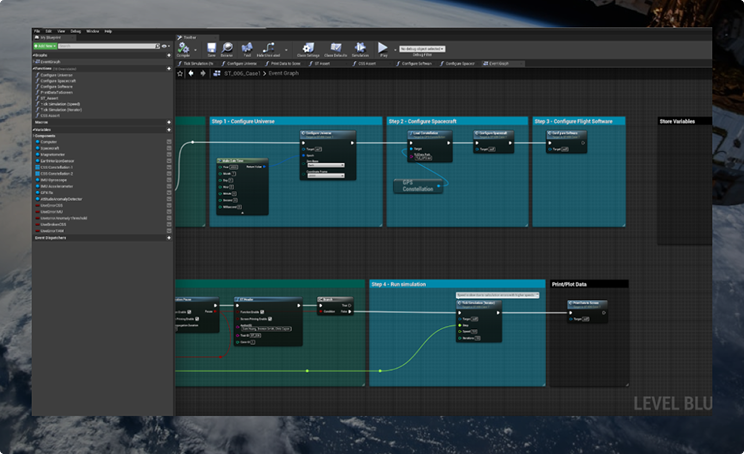
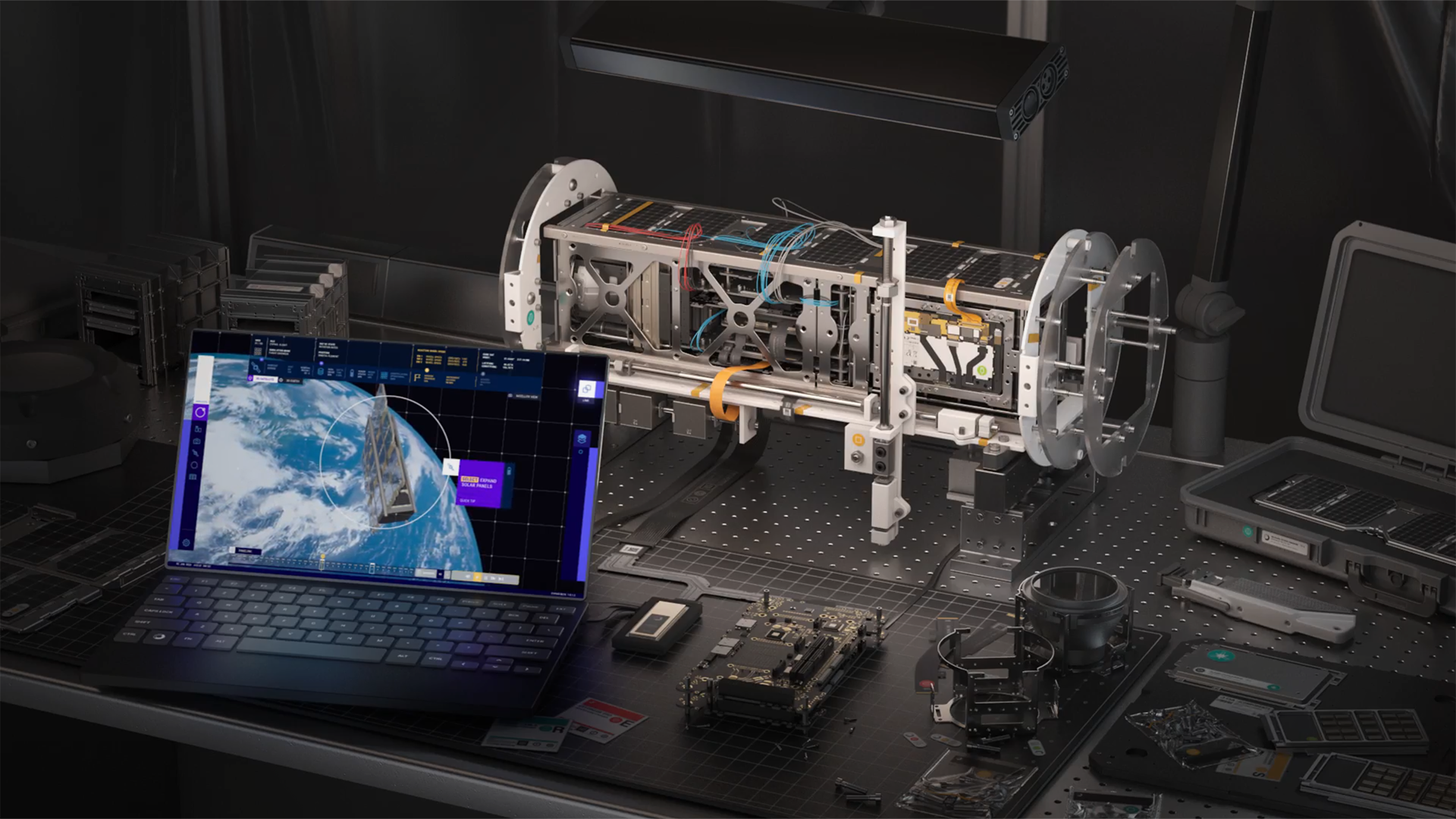
Every license of the Zendir Studio environment includes a library of pre-configured training scenarios from command rejection and payload misalignment, to RPO maneuvers and beyond. Speak to our team to request Zendir's catalogue of mission scenarios.
- Scenario creation and customisation: Want a quick way to identify if a simulation is a true digital twin environment? Ask for a demo that includes custom systems, orbits and mission properties. Want to know how scalable the platform is? Ask them to demo the build of those assets. Most so-called digital twins won't be able to meet that measure. But to stay ahead of the latest cyber tactics, you need rapid-build customisable assets; ideally in a user-friendly no-code interface.
Check out Zendir's drag-and-drop satellite configuration tools that offer a rapid-build interface without asking you to sacrifice system-level detail. Or systems-of-systems detail.
- Integration with existing tools: Accuracy is everything for elite operator training and mission rehearsal. For dynamic training in a mission-specific environment, a digital twin must be able to integrate with as many existing tools in your tech stack as possible. For cyber preparedness, look specifically for integrations with your security information and event management (SIEM) tools. This will allow your organisation to simulate real-world scenarios with the highest degree of accuracy and assess the efficacy of your existing security measures.
To ensure you've found the right solution for your unique operational environment, it's a good idea to compile a spec sheet of every tool in your operational stack, including both hardware and software, and see how many can be integrated. Every additional integration brings you closer to true digital twin configuration.
Cybersecurity is a critical issue for satellites and the organizations that operate them. With the increasing number of cyber attacks on satellites, it is important that organizations take steps to protect their systems and assets from bad actors with cyber tactics. Immersive simulation scenarios are the most effective tool for testing and improving cyber preparedness for your satellite systems and mission operations.
If you're ready to see how Zendir's pre-configured training scenarios or customisable digital twin environment can build your mission team's cyber capabilities, book a demo with our team today.




.png)


.png)