Zendir at AMOS 2026
More sensors and more resident space objects don't automatically mean better custody. In a proliferated architecture, the constraint that actually determines whether you keep track of a maneuvering object isn't raw capability - it's how a limited pool of dwell time, pointing agility, and revisit rate gets allocated when multiple priorities are competing for the same sensor, at the same moment.
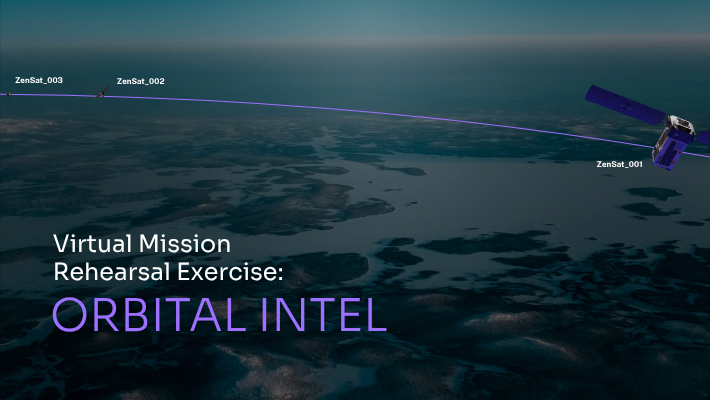
That's the problem our CTO Brenton Smith and Modelling & Simulation Engineer Amjed Ahmed Arifeen are putting in front of the room at AMOS 2026, in a short course built as an interactivetvie scenario, not a lecture.
Resource-Constrained Sensor Scheduling for Space Domain Awareness: A Scenario-Based Interactive Workshop
Effective Space Domain Awareness depends not only on sensor capability, but on how limited sensing resources are allocated in dynamic operational environments. Sensor dwell time, pointing agility, revisit rate, data latency, and competing tasking priorities all constrain the ability to detect, track, and characterise resident space objects particularly when unexpected maneuvers occur.
This interactive short course immerses participants in a realistic sensor tasking scenario to explore how resource allocation decisions directly affect custody maintenance and maneuver detection.
What you'll learn
- Identify the operational constraints that govern sensor tasking in proliferated architectures
- Recognise how dwell time, field-of-view (FOV), and revisit rate trade off against detection probability and coverage
- Understand how sensor geometry, illumination, and measurement precision influence observability
- Evaluate prioritisation strategies when multiple objects compete for limited sensor time
- Compare human-driven tasking decisions against structured, probability-informed scheduling approaches
Inside the exercise
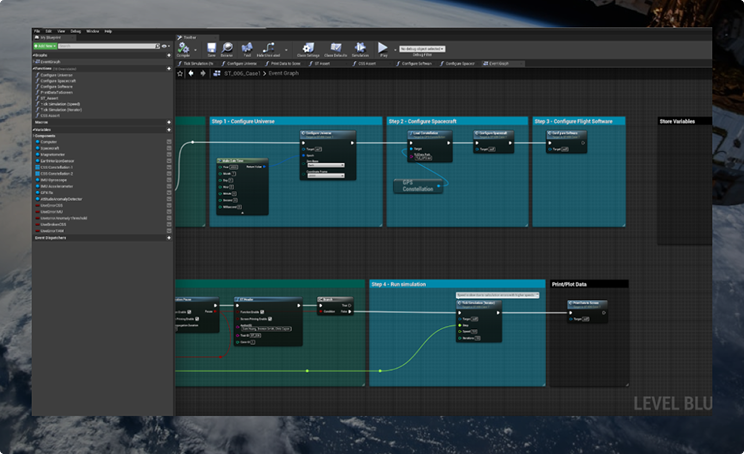
During the exercise, teams allocate space-based sensing resources to maintain custody of a maneuvering object. They make real-time decisions about which sensors to task, how long to dwell, and when to retask based on evolving conditions.
The wargame highlights realistic command-and-control trade-offs, including:
- Narrow-field high-SNR dwell vs wide-field lower-sensitivity search
- Rapid retasking vs fuel/attitude constraints and stabilisation time
- Frequent revisits for covariance containment vs distributed monitoring across multiple objects
- Immediate reacquisition focus vs maintaining catalog-wide situational awareness
- High-latency space-based sensing vs lower-latency but geometry-limited alternatives
What you'll leave with
By the end of the session, attendees will have a structured framework for reasoning about sensor allocation under operational constraints, and a clearer understanding of how tasking strategy impacts maneuver awareness, custody retention, and SDA system performance.
The course is designed for operators, analysts, engineers, and researchers seeking practical insight into the decision-level challenges of resource-constrained SDA architectures.
The details
-
Tuesday 15 September 2026, 1:00pm–5:00pm HST.
-
Wailea Beach Resort Marriott, Maui, Hawaiʻi.
-
In-person only
Register for Zendir Short Course: https://amostech.com/short-courses/